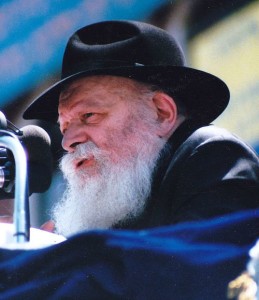
Showing posts with label Rebbe. Show all posts

1/26/26

A Dollar Delivered


A Rebbe Dollar : 20 Years in the Making

A blessing given once… delivered exactly when it was needed.

An American Jew, just before moving to Israel, went to the Lubavitcher Rebbe for a blessing. The Rebbe blessed him and handed him two dollar bills.


"One is for you… and the second is for the taxi driver."

The man was puzzled and took the dollars.

Twenty Years… in a Wallet

When he landed in Israel, he considered giving the dollar to the driver who took his family from the airport to the absorption center. But the driver was frantic and impatient, and the man felt intuitively that this wasn’t the “one.”

Years turned into decades and for twenty years, that dollar remained in his wallet.

The Taxi Ride That Changed Everything

Recently, this same man—now a long-time Israeli resident—took a taxi in the center of the country. He noticed the driver wasn’t wearing a kippah, but there was a Book of Psalms on the dashboard and a picture of the Rebbe tucked near the gearshift.

They began to talk. The driver shared that over the last few months, he had been exploring his roots and returning to Torah through a local Chabad center. Suddenly, the passenger remembered the dollar. He realized this was the moment.


"Take this… This is a dollar the Rebbe gave me to give to the taxi driver.”

“Let’s See Him Send You a Dollar Today!”

The driver slammed on the brakes. The taxi screeched to a halt. He turned to the stunned passenger, his voice trembling with emotion:

“Do you have any idea what you just did?” Ever since I started this journey back to my faith, it’s been very hard for my wife. She doesn’t understand it at all.

This morning, she was so upset she yelled at me:

“What is all this nonsense? What are these strange beliefs? The Rebbe has been gone for years! Do you really think it’s logical that he would send you a dollar for a blessing? Let’s see him send you a dollar today!

The passenger sat in silence, finally understanding exactly which “taxi driver” the Rebbe had in mind… twenty years before.

The Takeaway

The Rebbe’s vision transcends time and space. A small act of kindness or a blessing given today might be the miracle someone else is praying for decades from now.

You can still receive the Rebbe’s blessing today—just keep your heart open.

1/5/26

A Sefer and a Smicha


The author of the book was Rav Yechiel Yaakov Weinberg, the author of Seridei Eish. It was ritten in Berlin around 1928 and addresses the question of what happens when modern governments decide that Jewish cemeteries are standing in the way of “progress.”

Germany in the interwar period was rapidly urbanizing, and Jewish burial grounds were increasingly threatened by municipal decrees and development plans. Rav Weinberg was asked to confront the almost unthinkable: Under what circumstances, if any, may Jewish remains be exhumed and relocated? His analysis begins where it must: the fundamental prohibition against disturbing the dead, rooted in nivul hamet — the degradation of the deceased — and charadat hadin, the unsettling of the soul’s repose. Even after the body has decomposed and only bones remain, Rav Weinberg marshals earlier authorities, including the Shevut Yaakov, to argue that the prohibition remains in force. Skeletal remains are not halachically “neutral debris.”

A classic Seridei Eish balance: uncompromising fidelity to halacha, paired with a sober recognition of the world as it actually exists.

Yet Rav Weinberg was never a posek who lived in a vacuum. A product of the great Lithuanian tradition and fully conversant with the realities of modern Europe, he carefully delineates circumstances under which relocation may be permitted — cases of pressing public necessity, or when leaving the graves undisturbed would likely lead to outright desecration by secular authorities.

The Young Scholar in Berlin

What elevates this modest booklet to near-mythic status, however, is who studied it — and how. At the time, a young Rabbi Menachem Schneerson was also in Berlin. Long before he became the Lubavitcher Rebbe, he was already demonstrating a prodigious command of Torah. Rav Weinberg would ultimately grant him semicha, alongside a separate ordination from the Rogatchover Gaon, forging a record of rabbinic breadth few towering figures of twentieth-century Torah life could match.

A detail that matters

According to a well-known account, Rabbi Schneerson initially sought semicha for practical reasons: access to Berlin’s vast academic libraries. Rav Weinberg agreed in principle — but insisted that the young scholar undergo the same rigorous examinations as any other student.

Rabbi Schneerson pressed for a faster route. Rav Weinberg refused.

Then the young man’s son proposed that Rav Weinberg select any volume from his library, which he would master overnight and be tested on the following day. As one later observer noted, this was not merely confidence — it bordered on the unbelievable. Only someone already fluent in the entire sweep of responsa literature could even contemplate such a feat. Rav Weinberg, perhaps intrigued by the challenge, handed him Pinui Atzmot HaMet. This was no easy text — its mastery demands familiarity with obscure laws of burial, ritual impurity, and halachic precedents rarely reviewed even by seasoned scholars.

The next day, Rav Weinberg examined him and was stunned. The young R. Schneerson not only knew the contents of the booklet, but expounded on it with insight and precision. On the spot, Rav Weinberg granted him rabbinical ordination.


Sometimes, a sefer tells you more than its subject matter. This one captures a moment when halacha confronted modernity head-on — and when greatness quietly revealed itself, overnight, in a Berlin study hall.

2/28/24

Ties that Bind


The Torah portion Ki Tisa says (30:13): “Half of such a shekel is an offering to G‑d.”

Hasidim say that the Tzemach Tzedek conducted a very unusual linguistic analysis of the word “half” (“machatsit”).

This word consists of five letters: “mem-het-tzadik-yud-tav.” In the middle of this word is the letter “tzaddik” which alludes to the righteous man of the generation, the Rebbe. The second and fourth letters of this word next to the letter "Tzadik" are "Het" and "Yud"  which form the word "Chay" (living). The first and fifth letters of this word, which are away from the letter "Tzadik", are "mem" and "tav", which form the word "mat", dead.

This teaches us that if a person is close to the Righteous, then he is alive, and if he is far away, then...


May we all be close to the righteous man - Rebbe King Moshiach!

9/8/20

Three Amazing Rebbe Stories


Below are three amazing stories involving a close relative of mine and the Lubavitcher Rebbe.

Story 1

In the 1980's, my relative and her husband owned a used car lot in the Los Angeles area.

One a day customer came in and while examining a car, somehow severely injured his finger on the car's door jamb and had to be rushed to the hospital. The car lot owners got understandably upset and frightened as the injury could have resulted in a law suit with heavy fines and a possibility of losing the business altogether 

On the advice of a local Chabad rabbi, they wrote a letter to the Rebbe explaining the circumstances asking for a blessing to successfully deal with the situation. The answer came back within days in the form of a letter where in addition to the blessing, the Rebbe advised them to check the mezuzos and the tefillin.

They did have mezuzos, however the husband, as far as he knew, did not have a pair of tefillin and hadn't been putting any on for years.

Still, they were at a loss as the Rebbe specifically had indicated to check the tefilin as opposed to buying or borrowing. Not knowing what to do, the husband decided to ask his parents. Turned out they they had bought  him a pair of tefillin for his Bar Mitzvah many years prior but he either had forgotten or not even been told.  They rushed the tefilin to the local scribe to check which were found to be possul (defective). The tefillin were not worth fixing and the husband bought a new pair instead. The Rebbe had perceived that there was a pair of tefillin and that they had to be checked.

The punchline however is that a few days later, the person who injured his finger returned to the car lot beaming. His finger had been successfully treated and not only did he not have any plans to sue, he ended up buying a car from them!

Story 2

My relative owned a dog which one day disappeared. They were very upset and decided to post an ad in the local paper. Days went by and the dog was still missing.

My relative was becoming very agitated and emotional and asked the local Rabbi if it would be appropriate to ask the Rebbe for a blessing to find the pet. The Rabbi helped them compose a fax and an answer came shortly wishing them success in finding the dog.

Within hours they received a phone call from a local resident saying that she had just seen their ad in the local paper and that the dog was with her.

Story 3

In the early 2000's, my relative was pregnant with her  second child. During the pregnancy, certain abnormalities were discovered in the fetus via  the ultrasound. One was that the kidneys were not developing equally, etc. The parents were obviously concerned and decided to ask for a blessing and advice  from the Rebbe. This being after Gimmel Tammuz, they composed a letter, gave it to a local Chabad emissary who put it into a volume of Igrot Kodesh. He opened it to a page where the Rebbe discusses abnormalities in a growing animal but assures the farmer that things would eventually straighten themselves out.

The parents felt a sense of relief but still decided to go back for another checkup. When the doctor returned with the results, she was bewildered as to why they had even bothered to make the appointment. Things looked completely normal.


3/5/20

A Woman Sees the Rebbe


Image result for out of body experienceAbout two and a half years ago, an amazing story was publicized about something that happened in London, England that left a huge impression on the Jewish communities there and around the world.

A woman who was undergoing bypass surgery, experienced clinical death and miraculously came back to life. The news of the entire event was posted on various media outlets. When she woke up, she related what she saw above at the time of the clinical death – she saw the Lubavitcher Rebbe who was with all the righteous and told her that it was not yet her time and she would come back to life.

She was instructed to also publicize the fact that big events were about to happen, causing global chaos - in North Korea and China. The Rebbe emphasized that Israel would be safe. 

Indeed, about two and a half years ago, the North Korean-US conflict reached a new high, almost leading to nuclear confrontation. At that time, North Korea for the first time launched missiles with a range of 6,000 mi, capable of reaching the United States. 

When these events happened, the Rebbe's remarks about North Korea were understood to be a worldwide concern that could lead to the Third World War (because Russia and China supported North Korea). 

Now, after all that is happening in China, we also understand the rest of the Rebbe's remarks and we do see how the events in China have lead to chaos in the world. It should also be stressed that the Rebbe's words - that the Land of Israel would be safe are true and indeed we see that the number of people infected in the country is very small compared to other countries (about 15 in total – G-d should send them a complete and immediate recuperation). 

At the end of the Rebbe's words to the same woman, he tells her: "Redemption is in the doorway, King David of Israel is alive and well, I'll be there myself. I live and exist, live and exist, live and exist. "

3/1/20

They Should Know Who is Boss


Rabbi Reuven Dunin had the exceedingly rare privilege of unrestricted access to the Rebbe. He once related the following story:


“One night of yechidus (private audiences) I was in 770 waiting for the Rebbe to leave his room and go home. When it was already after midnight, I went outside 770 to wait for the Rebbe there. Suddenly, police cars blocked all approaches to 770, snipers went up on the roofs all around and a helicopter hovered over.

Secret agents set up a human blockade on the steps leading to 770 and examined every inch. Then a few limousines pulled up and several men came out and went directly to the Rebbe’s room. Outside, the agents continued to keep guard not allowing anyone to approach the area.

After about half an hour, they all left. “I was curious and so I went to the Rebbe and asked him who the people were. The Rebbe said they were from the Atomic Energy Commission.

I asked the Rebbe what they wanted and the Rebbe said they had a question that they were unable to solve for a long time and so they came to consult with him.

“Did the Rebbe help them?” I asked. “Yes,” said the Rebbe.  I said - “Why? The dropping of the atom bomb was a terrible thing …”

“Three reasons,” said the Rebbe. “First, their plans are for civilian reactors used for peaceful purposes. Secondly, the United States is a country that does chesed  (kindness) with Jews and I must help it.

Thirdly, so that they should know who is the Balabos (who is in charge).” 
 
 
This insight, that the Rebbe is not only a tzaddik and spiritual leader, but the head and brain of us all and therefore, the boss of everything – was part of Rabbi Dunin’s basic awareness of what a Rebbe is.


4/7/19

My out of this world experience with the Lubavitcher Rebbe.


This encounter took place in 1986 between a friend of mine and the Rebbe.

“I was getting married that day, I went to the Rebbe's door for his Siddur, as instructed, I knocked. Rabbi Groner  [The Rebbe’s secretary] opened the door and said  "Wait here.”  He left the door ajar about 4 inches.  I heard papers rustling. I was afraid to look in. I heard more papers rustling, I said to myself, maybe it's the Rebbe, but I immediately banished the thought, saying there is no way the Rebbe is here, right by the door, he's probably deep in his office. Again, papers rustling, I said,” have to look."
I leaned in, I couldn't believe what was in my eyes. I was terrified and basically had no idea of what i was seeing.
The Rebbe was in a short sleeve white shirt, wearing his glasses. He was standing in front of a small desk, on it were about 30 stacks of letters, piled at least 3 - 4 feet high, maybe each stack had 60 envelopes high. Nothing was falling, all non-moving, not a millimeter.
The Rebbe was pulling out and pushing in letters with tremendous speed and precision.”

Another similar story.

“In my first yechidus — private audience — with the Rebbe, in 1973 (I was 25), I was ushered in to his office. He looked up and asked, “you’re Gottlieb?” and I answered in the affirmative. There was a stack of maybe 20 or 30 letters in their envelopes on his desk. The procedure was to write in advance, in order to expedite the meeting. He deftly pulled a letter from the middle (not the top) of the stack and put it down in front of him. Without opening the envelope he answered every one of my ten questions in perfect order, except one. In its place he answered a question I hadn’t asked: “...with regard to the question of whether to put on Rabbeinu Tam’s tefillin, it would be a good idea.” My actual question had been about learning and my inclination to learn in a faster shiur. Rabbeinu Tam’s tefillin had never occurred to me,  I’d only been regularly putting on Rashi’s for about a year and this was before the advent of the custom of all bar mitzvah boys taking on Rabbeinu Tam’s immediately. 

In the 4+ decades since then I’ve come upon numerous insights into the profound connection between my original question and his seemingly irrelevant (or rather, oblique) response.

Answering letters was one of the Rebbe's main occupations, the others being praying at the Kever of his father in law, the previous Rebbe, studying and writing Torah novellae, and farbrenging for his Chassidim.  

There were stacks and stacks of letters, but the Rebbe always knew exactly what he was looking for, zeroed in on the letter, removed it and responded to it without upsetting the entire stack.  It was like the letter was speaking to him even before he saw it physically, he knew what to answer and when.  Definitely a Ruach Hakodesh (Holy spirit) thing.


I never observed the process myself, so I cannot give you a first hand account.  But there are several accounts that corroborate the first story,  the Rebbe seemed to know exactly what letter to answer, zero in on it , and pull it out of the stack without upsetting it. What he did with it afterward I don't know, but probably it went into another stack that Rabbi Groner and Rabbi Klein would know that they are the "answered letter."  And then they would communicate the Rebbe's answer to the person who wrote the letter.”


11/24/15

Did the Rebbe say that he is the Moshiach?


During Rabbi Groner’s testimony, he was asked whether using the title “Melech HaMoshiach” was ever authorized, or allowed, by the Rebbe to be used in the Rebbe’s Seforim. This after noting that some Seforim bear that title, such as the Lekutei Sichos and “Bsuras Hageulah”.

Rabbi Groner responded that he once entered the Rebbe’s room and expressly asked whether they may use the title, and the Rebbe consented. Afterwards, he read for the Rebbe the exact wording of the title page of “Besuras Hageulah” which states Melech HaMoshiach after the Rebbe’s name, and asked whether that may be printed, and the Rebbe nodded his holy head in the affirmative.

Read the full story here:


8/27/15

Rebbe's advice


Ed Joyce used to have a famous talk show – “The Talk of New York” – before he became president of CBS News.

He  went to see the Rebbe and him the following:  “If the Jews are the Chosen People, what role is there for someone like me who is not Jewish?"

The Rebbe answered, “Everyone has an individual role, and we can’t do our part unless others do their part. Just like a body and all its limbs. If you want to go forward and take something, your feet have to take you over to the object, your hands have to pick it up, and so on. It doesn’t work any other way. You can’t leave your feet here and your hands there. This is the way the world functions too, and every person has a reason for which he was created. Each one has to do his part so the other one can do his part.”

Ed Joyce was very impressed with that answer; so impressed that he wanted his wife and children to meet the Rebbe.

5/26/15

@ The Lubavitcher Rebbe on Tefillin


In the early sixties the “mainframe computers” were making their first appearances in businesses. Professor Avraham Polichenco was a professor of computer science who introduced computers to Argentina.

This pioneer was fortunate enough to visit the Rebbe and engage in conversation with him. In one of their conversations the professor asked the following: “I know that everything that exists in the world, even something that we discover later in history, has its source somewhere in the Torah. So, where are there computers in the Torah?” What was the Rebbe’s response? “Tefillin.”

5/22/15

"We Will Not Fly to the Holy Land on an Airplane!"


The Rebbe said many times that we will not go to the Holy Land on a plane, but rather on the Clouds of Glory. This is meant literally:

It has been mentioned several times about what is explained in various places, in the Rishonim and Achronim, etc. that Moshiach Tzidkeinu is able to come in the middle of Shabbos!...


Since we are speaking about the true and complete Geulah -- it is understood, that this is not going to be in a way where on the day of Shabbos we are found in "Brooklyn" and after Shabbos ends, we board an "airplane", and travel several hours until we reach the Holy Land, Yerushalayim the Holy City, the Har Habayis and the Beis Hamikdash - for this is not the true and complete inyan of "immediately", but rather in one moment "it hits you" that we are found in Yerushalayim the Holy City, on the Har Habayis and in the third Beis Hamikdash , together with Moshiach Tzidkeinu. (Parshas Re'eh, 5743)


Very soon we will merit the true and complete Geulah via Moshiach Tzidkeinu -- in a way of "Achishena" ("faster and faster"), "coming with clouds of Heaven" - a flight that is faster than the flight of an "airplane", because flying "with clouds of Heaven", with the "the Holy One's airplane" -- to our Holy Land, and there -- to Yerushalayim the Holy City, and there -- to the third Beis Hamikdash...which will be built speedily in our days mamash. (4 Tishrei, 5743)


It is known the saying [of the Rebbe Rashab] that when Moshiach Tzidkeinu will come they will print about his coming in the "newspapers" ("gazetten") -- and so it will be for us that we will see in the "newspapers" of the nearest days that Moshiach Tzidkeinu came!... And all of us as one will fly as together with him in the "airplane of airplanes", "on clouds of heaven", in one moment -- to our Holy Land...there -- to Yerushalayim the Holy City...and there is found the house of the Kohen Gadol -- like the words of the Rambam in todays portion: "His home will be in Yerushalayim and he will not move from there", and there -- to the third Bais Hamikdash... (29 Elul 5744)

1/30/15

The Moshiach Tsunami


This is an excerpt from an address by R. Adin Steinsaltz on the occasion of the Rebbe's  centennial in 2002. It mentions tsunami and is dated  March 11.  March 11, 2011 is, of course,  when a devastating tsunami hit Japan.


The full article is here.

"...When we speak about the coming of Moshiach, we speak about a mega-event, a major phenomenon that changes everything. We may not be fully prepared and we don't know the how, what, or when of this event, but we are talking about major changes. One of the consequences of this statement is that, if we are expecting things to change in a major way, we will have to make major changes, too. Next to the truly momentous changes we are anticipating, all of our trivial arguments shrink into trifles; our disputes are comic, not just painful. Many of the things that people fight about are the sheerest, shallowest nonsense, especially if we compare these quarrels to the establishment of an entirely different order. ... Who will remember all these foolish people who were fighting about such things? When the tsunami is about to envelop the world...everything will be moved..."

8/14/14

Wealth Quest


“A Jew must strive to be rich in the literal sense and in all respects, beginning with affluence in spirituality…”
From Chapter Six of Rabbi S. Majeski’s Likkutei Mekoros (Underlined text is the compiler’s emphasis.)
Translated by Boruch Merkur
11. […] This is the last generation of exile and the first generation of redemption, having completed everything [all aspects of avoda] and the only thing that remains to be done is to welcome Moshiach in actuality. In our times it is certain that G-d blesses each Jew with wealth in gold – in both the material and spiritual sense. G-d blesses Jews with wealth to the extent (as it was “in the days of your exodus from the land of Egypt,” so it is now, “I shall show them wonders”) that “There was not a single Jew among the Jewish people who did not have with him ninety fine donkeys laden with the silver and gold of Egypt.”

7/7/14

The Rebbe and the Brass


Orginal article here
The Brooklyn Navy Yard, where the Rebbe worked  after  arriving in  America in the early 40's, housed a large auditorium where many worked openly at their own desks and offices, closed from view, for higher-ranked individuals. Someone sitting in the auditorium could see those who would enter or leave the building.

At one such desk sat a man who saw something daily that intrigued him. Every morning a pair of generals would walk to the door and escort a bearded Jew to his office, and every afternoon when this Jew would leave his office, two generals would escort him to the auditorium's door.

He wanted to know who this was. One afternoon, after the generals turned back, he followed the Jew from behind, then stopped, when he realized the Jew sat down at the bus stop. At a bit of a distance, he waited. Once the bus arrived, he hurried to get onto the bus before it closed its doors, to continue his tracking.

When the Jew got off the bus,  he too got off. It was at Eastern Parkway, in Crown Heights. There he saw the Jew enter 770. He asked chassidim there who this Jew was and they told him he was the revered son-in-law of the (Previous) Rebbe.

This story, the man himself who tracked the Rebbe, also a Jew, told us one Shabbos, many many years laters. He was our Shabbos guest whom we hosted that Shabbos in 770, some 18 to 20 years ago, to "farbreng" with us.

The other thing I remember from this story, although its recollection is faded, and therefore on this point I'm not entirely certain, is that the work at the Navy Yard entailed secrecy because it concerned the "Manhattan Project".

6/15/14

The Rebbe of Rebbes


Rebbe speaks to his followers in Brooklyn in January 1992 about the everlasting nature of the soul on the fourth anniversary of his wife's death.


Are you Jewish?" If you've lived in a large American city in the past 30 years and look the part, chances are that a young Hasidic man has approached you with this question. Men who answer "yes" are given a quick tutorial in tefillin, ritual objects worn by Jewish men during prayer; women receive Sabbath candles with instructions to recite ancient blessings. It all seems suspiciously cultlike, but these bearded enthusiasts aren't out to convert anyone. They are emissaries of Chabad (also known as Lubavitch), a religious movement whose goal is to expose more Jews to Judaism—unconditionally.

6/9/14

How one rabbi modernized Judaism and began a movement


From a spartan basement synagogue in Crown Heights, Brooklyn, Rabbi Menachem Mendel Schneerson became the spiritual leader to tens of thousands of Hasidic Jews across the globe, a man whose counsel was sought by world leaders and rock ’n’ roll icons.

As the grand rabbi, or Rebbe, of the Chabad-Lubavitch movement, Schneerson was a pioneer — the man who, unlike his forebears, made it his mission to spread Judaism across the globe, dispatching an army of emissaries to help convert, or at least convince, Jews to become more observant. He was also — some of his followers still believe — the messiah. But he had no children, so when Schneerson died 20 years ago on June 12 at the age of 92, the group’s seventh grand rabbi also turned out to be the last — there was no consensus who the next leader should be.